Empower Aging Project
The Empower Aging Project aims to promote a sense of individual and collective empowerment regarding one’s aging trajectory, maximizing opportunities for individuals to achieve healthy longevity through meetings in small or medium-sized groups.
Through role-playing activities, information sharing, and the use of immersive technologies, the project addresses topics related to aging dynamics, potential health and risk factors, and the individual and collective resources that can be used or developed.
Do you want to take responsibility for your health as you age?
WRITE TO US: longevita@unibg.it
CALL US: +39 035 2052313
Longevity and Quality of Life Project

The project “Longevity and Quality of Life – A Study on the Elderly of the Future in the City of Bergamo” aims to investigate which indicators are most likely to guide people approaching old age toward high-quality aging.
The project is addressed to residents of the Municipality of Bergamo who are in the so-called pre-aging stage (55–65 years old) and those who are already elderly (65–75 years old). During the first phase of the project, lasting approximately one year, we intend to analyze the mental representations of Bergamo citizens regarding the transition toward aging and old age itself, identifying the population’s needs, resources, and potential through questionnaires and semi-structured interviews (both online or in person, according to participants’ preferences) exploring each individual’s perspective on aging.
Through the questionnaires, data will be collected regarding:
- demographic information;
- quality of life;
- level of autonomy;
- cognitive abilities.
The interviews, on the other hand, will provide information about the strategies participants intend to use or are already using to cope with the transition to aging, their individual resources and behavioral styles, as well as areas of fragility or critical concern.
Based on the collected data, participants will subsequently be divided into four groups characterized by their specific features and needs:
- Potential Super-Agers (SA): future older adults who are fully autonomous, maintain excellent psychophysical functioning without limitations in autonomy, and maximize their quality of life;
- Potential Healthy-Agers (HA): future older adults who are not completely autonomous but maintain good psychophysical functioning, experience manageable limitations in daily life, and enjoy a good quality of life;
- Potential Frail-Agers (FA): future older adults with psychophysical frailties during the aging process that are likely to affect autonomy in daily life and quality of life;
- Potential Unhealthy-Agers (UHA): future older adults with medical conditions (e.g., chronic disorders, neurodegenerative diseases, depression, etc.) that are likely to significantly impact their autonomy and quality of life.
The second phase of the project involves the design and implementation of interventions specifically tailored to each of the four groups, with the following objectives:
- maintaining the optimal aging style and trajectory for the Potential Super-Agers group;
- improving the aging style and trajectory of the Potential Healthy-Agers group, helping them better compensate for moderate daily-life limitations and move toward the condition of fully autonomous older adults;
- teaching protective and compensatory behaviors and strategies to participants in the Potential Frail-Agers group;
- teaching protective and compensatory behaviors and strategies to the Potential Unhealthy-Agers group and guiding them toward consciously undertaking preventive actions, such as clinical or diagnostic examinations, which may positively impact their quality of life and support quality aging even in the presence of illness.
In this way, it will be possible to identify, within the population of the Municipality of Bergamo, the dynamics that promote the development of healthy aging pathways and trajectories, and to derive indicators capable of improving citizens’ quality of life. These indicators may then be used to provide intervention opportunities for the elderly population, encouraging healthy lifestyles when approaching later life, and to monitor the implementation of behaviors associated with these indicators in order to maximize the promotion of healthy aging.
Poster of the “Longevity and Quality of Life” Project
MinM – Mind in Motion project
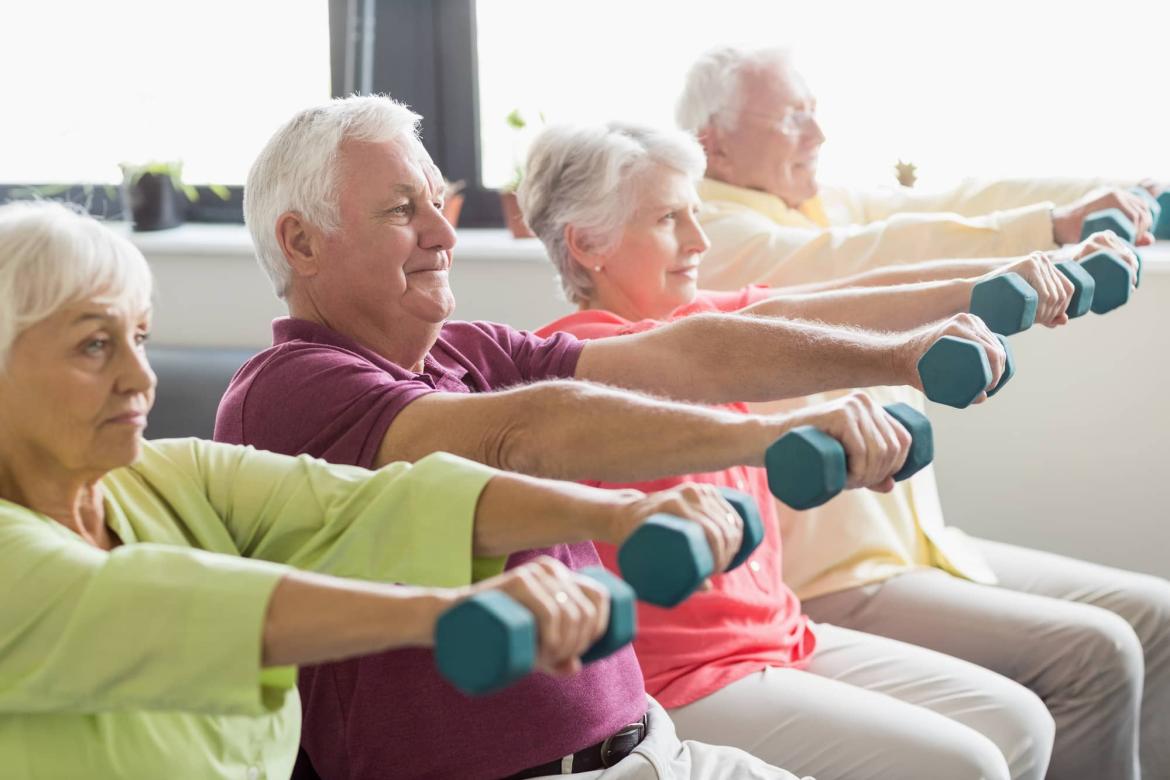
Mind in Motion is a research and health promotion project developed with the aim of validating an innovative Ideomotor protocol for people approaching older age or wishing to persue a healthy ageing trajectory.
The project builds on existing community-based interventions, with the aim of enhancing, integrating, and optimizing them through a multidimensional approach to health. The proposed protocol combines motor, cognitive, and social components, promoting individual well-being from an integrated perspective. The aim is to stimulate, through movement, the cognitive components most at risk of decline with advancing age.
The study protocol has been registered on the international platform ClinicalTrials.gov with the identifier NCT07494149 , with the aim of evaluating the effectiveness of the Ideomotor protocol in healthy community-dwelling older adults over 50 years old.
Partners and local network
The project is carried out in collaboration with the CUS of the University of Bergamo and ACLI Bergamo APS [IL2] – Christian Associations of Italian Workers, partners actively involved in implementing the protocol within the local community.
This network is further supported by the Third Mission activity of the University of Bergamo (IRIS PEN-0372), which enabled the implementation of solely cognitive stimulation groups. This component strengthens the scientific value of the project by allowing the effectiveness of the integrated ideomotor protocol to be compared with an intervention focused exclusively on the cognitive dimension.
Bergamo in Motion
The protocol has also been implemented within the Bergamo in Motion project[IL3] , an initiative that promotes outdoor physical activity in the city’s parks. Bergamo in Motion offers ten free fitness and wellness sessions in the city’s parks, transforming urban green spaces into places for health, social interaction, and quality of life. Within this framework, Mind in Motion enriches physical activity with elements of cognitive stimulation, promoting an experience that engages both body and mind and encourages the active, inclusive, and health-oriented use of public spaces.
AFA Over 65 Project
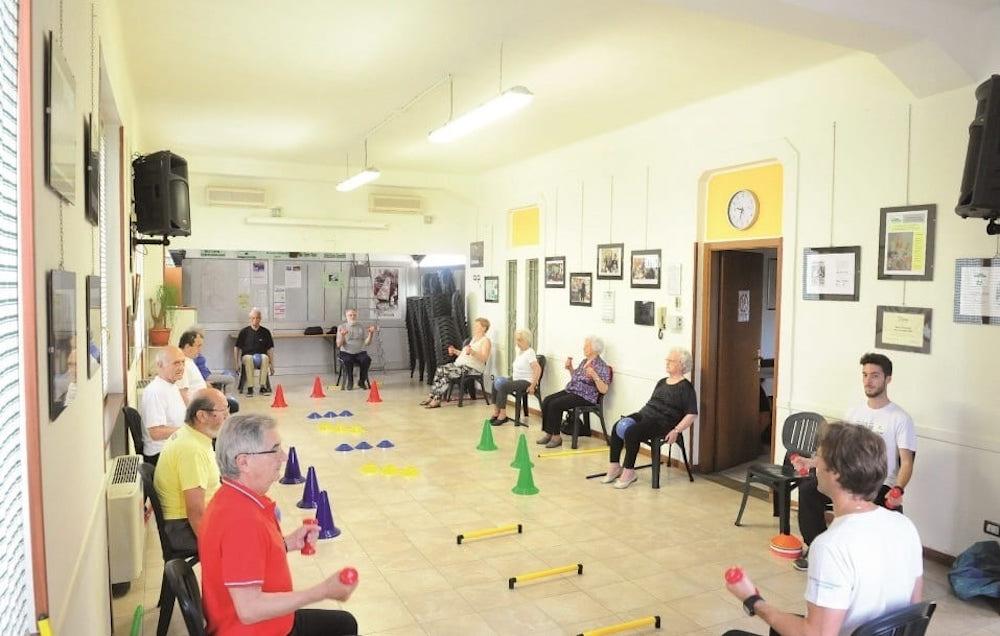
The AFA Over 65 project– Adapted Preventive Exercise, promoted by CUS Bergamo – the University Sports Centre of the University of Bergamo, was developed as a community-based adapted physical activity programme for people over 65 with limitations in autonomy, chronic conditions, or disabilities. Carried out in collaboration with ATS Bergamo, ASST Papa Giovanni XXIII, ASST Bergamo Ovest, ASST Bergamo Est, the Medical Association, and the Order of Physiotherapists, the project offers adapted preventive exercise pathways aimed at counteracting hypomobility, fostering socialization, promoting a more active lifestyle, and preventing the risk of falls. The programme is addressed to men and women over 65 who wish to undertake an educational-motor pathway aimed at maintaining autonomy in later life.
AFA Over 65 represents one of the most significant initiatives in the Bergamo area in the field of active ageing promotion. The project is currently active in 91 municipalities across the province of Bergamo.
Scientific research on the AFA Over 65 project
The collaboration between CUS Bergamo and the University of Bergamo made it possible to launch a research pathway aimed at quantitatively evaluating the effectiveness of the AFA Over 65 programme, while also contributing to increasing its scientific visibility at both national and international levels.
This collaboration has led to the publication of two scientific studies. The first, exploratory in nature, analysed the relationships between emotional status, cognitive functioning, motor functioning, and quality of life in physically active older adults participating in the programme. The results showed that emotional status represents a central component in the promotion of quality of life, suggesting the importance of considering not only the physical dimension, but also psychological and social aspects when designing group exercise programmes for active ageing. The article can be accessed by clicking here.
The second study evaluated the effects of the programme through a 15-week pre-post design. The results showed significant improvements in endurance, upper-limb strength, and executive functioning, together with the maintenance of relevant dimensions such as lower-limb function, handgrip strength, short-term memory, emotional well-being, and quality of life. The article can be accessed by clicking here.
Overall, these findings confirm the value of the AFA Over 65 programme as an accessible and sustainable community-based health promotion intervention for people with limitations in autonomy, chronic conditions, or disabilities.