CASA Project
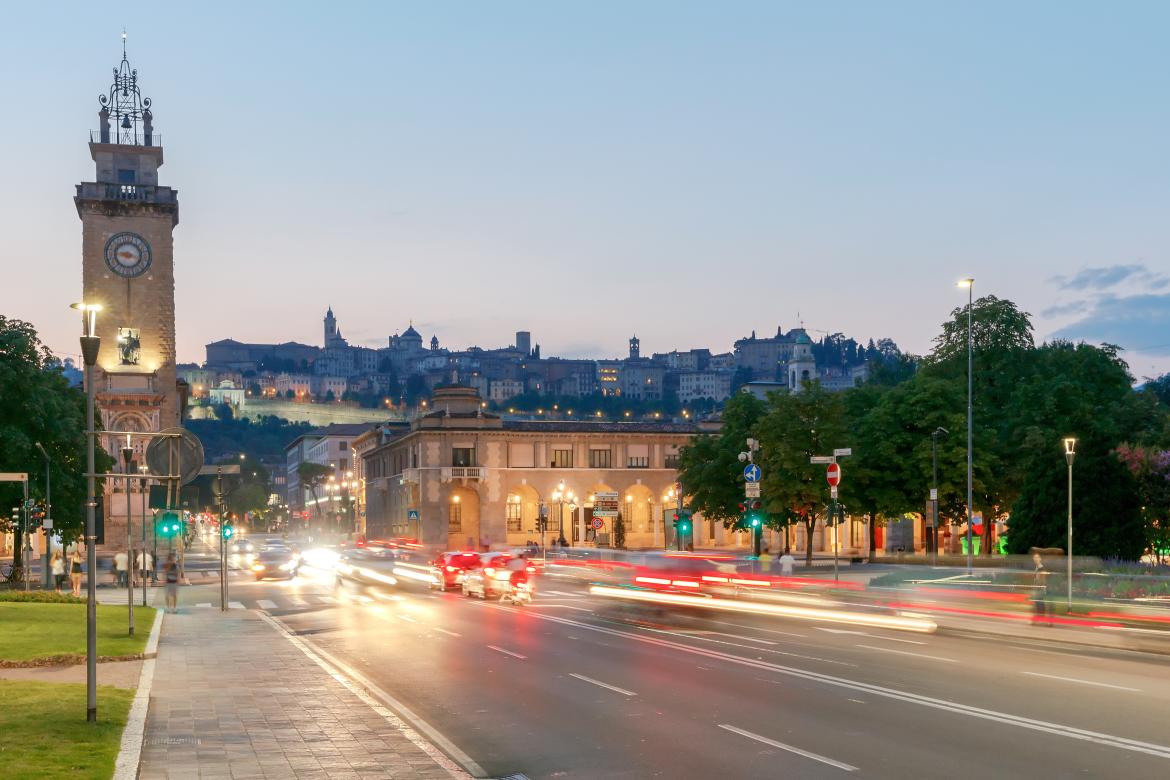
In Italy, most people over 65 live in medium-sized cities and, in the absence of hospitalization due to non-self-sufficiency issues, continue to age while remaining in their own homes (Aging in Place). Housing conditions therefore influence the daily lives of individuals even in old age, shaping health trajectories for longevity.
The CASA project, “Aging in medium-sized cities: how Housing Conditions and urban spaces can reduce or increase opportunities for Healthy longevity” – coordinated by the CHL (Centre for Healthy Longevity) of UniBG and funded under the cascade call of Spoke 1 of AGE IT - Ageing Well in an Ageing Society, extended partnership PE00000015 - CUP B83C22004800006 PNRR - aims to analyze the conditions of housing and urban spaces, including social opportunities and service availability, focusing on the small geographical areas, the neighborhoods, that characterize medium-sized cities. The study will be carried out in the city of Bergamo, which is representative of medium-sized Italian cities, partly due to its percentage of residents over 65 (approximately 30%).
On the occasion of the AGE-IT Spoke 1 Conference – dedicated to the demography of aging under the leadership of the University of Florence – held in Rome on October 3-4, Professor Francesca Morganti, scientific director of the CHL, presented the objectives of the CASA project. The project involves three Departments of the University: the Department of Human and Social Sciences, the Department of Engineering and Applied Sciences, and the Department of Economics.
The 13-month project, which started on October 1st, aims to increase knowledge of the various dimensions of housing and urban vulnerability in medium-sized Italian cities, and to analyze the relationship between the main characteristics of these cities and the potential aging trajectories of elderly citizens and those who are about to age there. The research will use the Municipality of Bergamo as a case study, given that it is a local reality characterized by well-defined spatial, social, and institutional conditions, and serves as an example of a "medium-sized city" for the definition of an analytical-interpretative model applicable to other urban contexts.
This funding represents a unique opportunity for UniBg to enter a highly significant national network on longevity studies. It also confirms the University's commitment to the theme of aging, which has already been demonstrated by joining the "Cities of Longevity" network, promoted by the international center NICA (National Innovation Centre Ageing) in Newcastle, and by the Memorandum of Understanding signed at the creation of the CHL by numerous local stakeholders from the Lombardy and Bergamo areas: the Mario Negri Institute, the Province of Bergamo, FERB, ATS Bergamo, Confindustria Bergamo, and the Municipality of Bergamo.
Aging in Urban Places Project
Population aging and increasing urbanization require a reflection on the relationship between health and the urban environment. The project aims to explore Aging in Place (AIP)—the opportunity to age independently and well in one's own home and community—within the city, through a complex and multidimensional epistemological approach.
The research, launched in close collaboration with the Municipality of Bergamo, adopts a biopsychosocial perspective inspired by Bronfenbrenner’s ecological model and the World Health Organization’s guidelines for healthy cities, analyzing the interaction between individuals and the built environment.
The collaboration between urban planners, coordinated by Prof. Emanuele Garda, and psychologists, coordinated by Prof. Francesca Morganti, allows the research to focus on two main areas:
-
The individual dimension, through health status assessments and investigations into how people experience the aging process, the reasons behind their housing choices, and their use of surrounding urban spaces.
-
The spatial dimension, through an analysis of neighborhoods and, subsequently, the degree of affordance of urban spaces—meaning the possibilities for action that can shape the city either as a resource or as a barrier (not only physical) to the well-being and empowerment of older people.
The result will be a multilevel research model that will make it possible to identify different degrees of healthy longevity. The ultimate goal is to support public policies aimed at improving urban design to foster AIP, promoting a shift in perspective toward cities that are more inclusive and aware of the challenges of aging. This vision contributes to redefining the future of cities, turning them into environments that are better equipped to respond to people's needs at all stages of life.
City Shapers Project
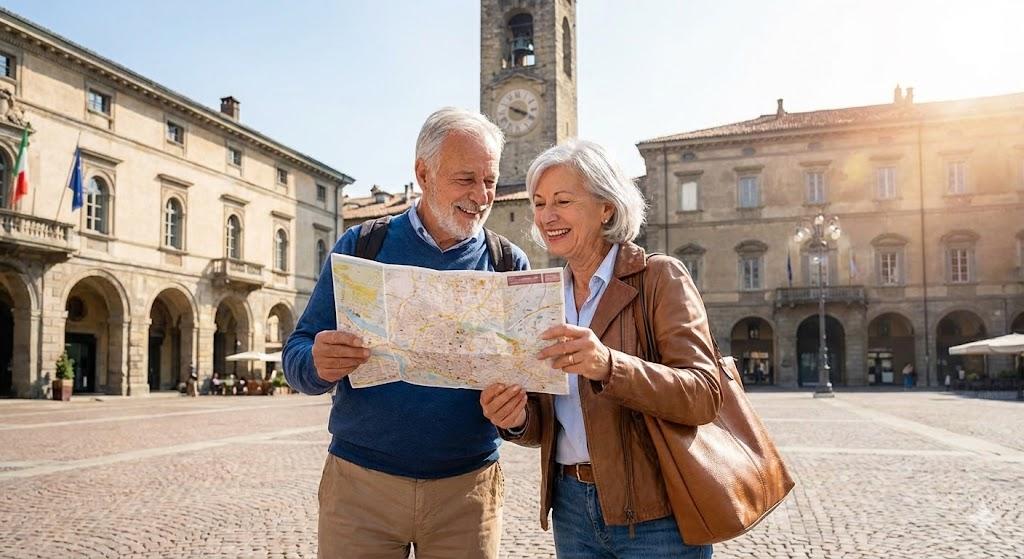
Active Researchers for Bergamo: A City of Longevity
The daily experience of Bergamo's citizens at the heart of the research
Throughout 2025, through the CASA project—funded by the PNRR within the Age-it extended partnership—the CHL (Center for Healthy Longevity) of the University of Bergamo conducted an in-depth analysis of how our city welcomes its oldest citizens and the challenges associated with aging in an urban environment.
This initiative stems from the need to move beyond current narratives surrounding aging in one's own home and neighborhood (Aging in Place), which are often limited to a purely functional or medical perspective focusing on home safety and the management of decline.
The proposed approach promotes a radical paradigm shift: moving from a vision of "frailty" to a "situated" and enactive perspective that recognizes long-lived individuals as a strategic resource for the resilience of the entire community. From this viewpoint, well-being is not defined solely by the absence of architectural barriers, but by the "affordances"—meaning the opportunities for action—effectively offered by the urban environment.
A multidisciplinary team of professors, researchers, and professionals (comprising geographers, urban planners, architects, psychologists, and statisticians) built a solid scientific foundation by analyzing six key neighborhoods in the city of Bergamo: Città Alta, Valverde/Valtesse, Centro (Pignolo), Borgo Palazzo, Celadina, and Colognola, defining core pillars for understanding the territory:
-
Context Analysis: A real-world snapshot of demographic transformations and residential flows of the over-65 population within the neighborhoods.
-
Perception of Living: The results of questionnaires tracking quality of life and the sense of belonging to places.
-
The HAL Index (Housing Vulnerability for Longevity): An innovative composite indicator (available at valindex.it) that measures the overall level of vulnerability based on 47 indicators grouped into five thematic areas (demographic, economic, healthcare, urban-environmental, and social-relational).
This initial analysis revealed complex dynamics, showing how a neighborhood's structural vulnerability is sometimes compensated for by social capital, or how the risk of becoming isolated ("Stuck in Place") can emerge despite comfortable housing. However, statistical data alone cannot tell us how the city is actually experienced every day. To understand real life, it is essential to integrate geo-urban planning data with the daily experiences of those who inhabit the neighborhoods, collecting data that would otherwise be impossible to retrieve.
For this reason, the project “City Shapers - Active Researchers for Bergamo: A City of Longevity” was launched in 2026. In this phase, citizens are not passive subjects of research, but true active co-researchers called upon to map Bergamo. Their voices and movements become the driving force behind the investigation, identifying not only physical obstacles but also the emotional and relational geographies that foster or inhibit a sense of belonging and an active life within their neighborhood.
Citizens are invited to contribute through two main methods:
-
Telling the story of the city: Participating in narrative interviews to provide deeper insight into how they move daily and how they use public spaces.
-
Monitoring the territory: Collaborating in an experimental data collection activity to track real routes, identifying "on the ground" both physical obstacles and the opportunities that neighborhoods offer.
Two onboard tools are used:
-
An App to be installed on smartphones and activated every time they leave the house, to track movement maps of people in the city.
-
The "Active Researcher’s Diary," a document to note down the details of each outing, with a particular focus on the motivation behind it.
This contribution highlights how integrating the lived experiences of long-lived individuals with a careful geo-urban reading of the city produces a wealth of real-world information and data that would otherwise be unrecoverable. Furthermore, by transforming citizens into potential agents of change who actively shape their environment, this approach promotes an Aging in Place model that prioritizes autonomy, identity continuity, and social participation.
Through this multidimensional and multidisciplinary research model, we argue that the future of inclusive cities lies in recognizing longevity as a stage of potential, capable of generating new forms of community action and shared value. In this context, every walk, every diary note, and every story told will become fundamental pieces to better understand urban dynamics and design a Bergamo that is increasingly welcoming, safe, and accessible for everyone.
The project will be presented at the 3rd World Congress of Age Friendly Cities and Communities June 16 - 18, 2026 - Donostia/San Sebastián, Spain
For information and applications: Dr. Stefania Butti - Stefania.butti@unibg.it Tel: 035 - 2052313 Fill out the form